AI crawlers vs product feeds: who reads your site, and why it goes stale
ChatGPT, Google, Copilot, Perplexity and Meta all send bots to read product pages, and Perplexity has no published feed at all, so for many merchants a crawler is what the assistant knows about them. A crawler decides which pages to read and when, so prices, stock and variants drift; robots.txt, structured data and a feed wherever one is accepted are the controls you have.
Last verified 21 November 2026. A five minute read.
Which assistants read your site, and which take a feed
Every assistant that shows products sends a bot to product pages. Some take a feed as well, which gives you a way to say what's true; one doesn't publish a feed at all.
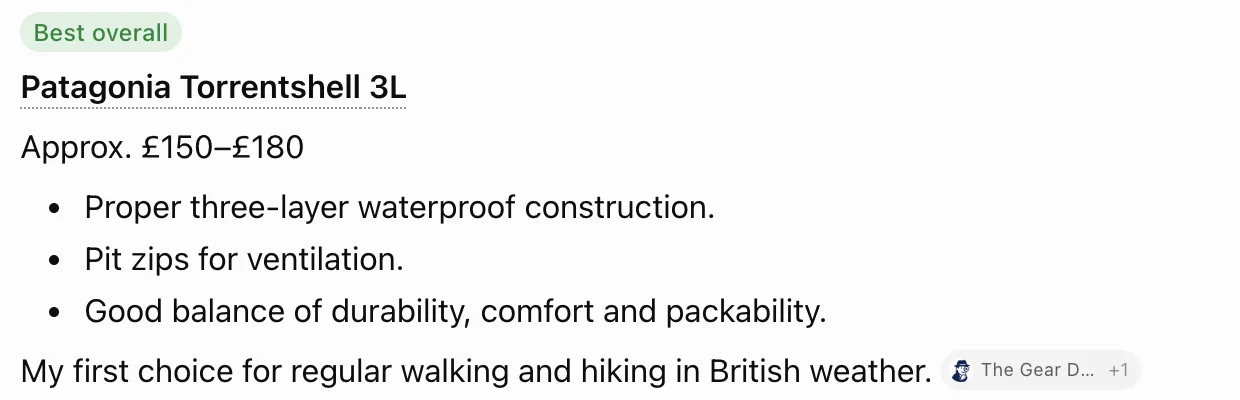
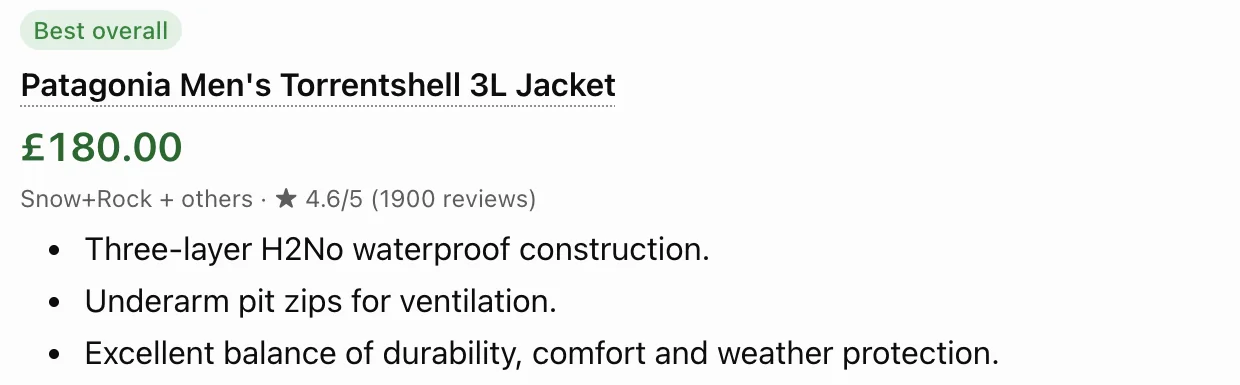
We asked ChatGPT the same question three times on 21 November 2026. The Patagonia jacket came back at £141.79 from one seller, then as "approx. £150 to £180" citing a review site, then at £180.00 from another seller. None of those is your price unless your data put it there.
| Assistant | Takes a product feed? | Bots that read your pages, per its own docs |
|---|---|---|
| ChatGPT | Yes, US shoppers for organic results; ads feeds in 89 countries12 | OAI-SearchBot (search), ChatGPT-User (fetches when someone asks), GPTBot (training), OAI-AdsBot (ad landing pages), per OpenAI's crawler page3 |
| Google AI Mode and Gemini | Yes, your Merchant Center feed4 | Googlebot (Search), Storebot-Google (Shopping); Google-Extended governs Gemini training and grounding, not Search, per Google's crawler list5 |
| Microsoft Copilot | Yes, Microsoft Merchant Center6 | Bingbot; from 1 February 2027 a page can opt out of AI grounding with a Bingbot meta tag, per Bing's October post7 |
| Perplexity | No published spec; a merchant interest form8 | PerplexityBot (search), Perplexity-User (fetches when someone asks), per Perplexity's docs9 |
| Meta AI and Muse | Your Meta catalogue; Meta says Muse and Meta AI can find your product data in it, and has no separate Muse feed1016 | meta-webindexer (Meta AI search), meta-externalfetcher (fetches when someone asks), meta-externalagent (training), facebookexternalhit (link previews), per Meta's crawler page11 |
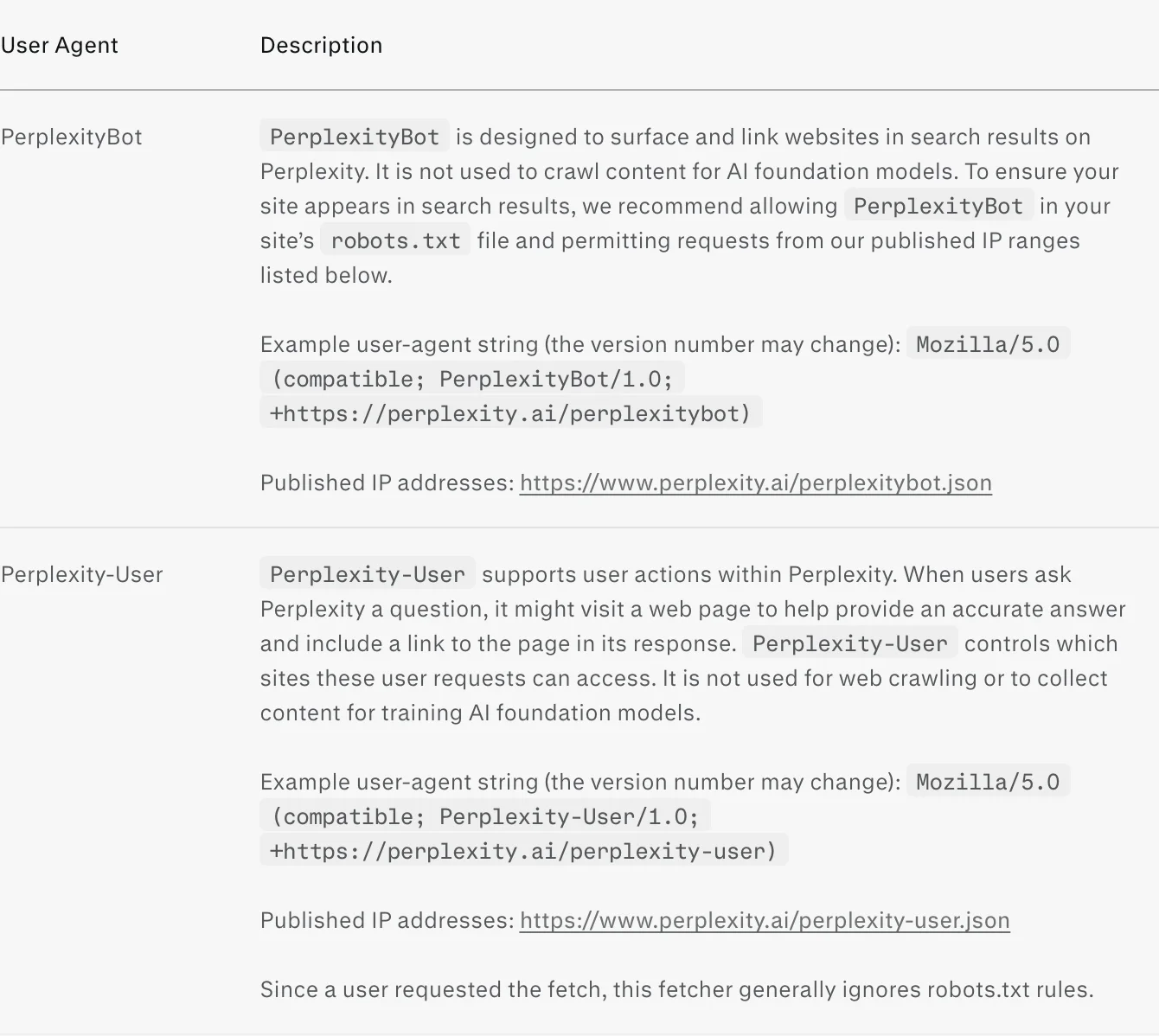
Crawlers like OAI-SearchBot and PerplexityBot visit on their own schedule and build an index. Fetchers like ChatGPT-User, Perplexity-User and meta-externalfetcher visit because a person just asked, and all three operators say they may not follow robots.txt for that reason3911.
Why leaving it to the bot makes product data wrong
A crawler decides three things you'd rather decide yourself: which of your pages it reads, how often it comes back, and what it makes of what it finds. None of the operators above publishes a revisit schedule for product pages.
Price is the first thing to drift. You start a sale on Friday; the bot's copy is from Tuesday. A shopper is quoted the old price, clicks through and sees a different one, and it's your page they stop trusting.
Stock is worse, because it changes faster. A crawled page showing "in stock" a week ago keeps showing it in the answer after you've sold out.
Variants are where we see it most. Most product pages open on a default colour and size, and the price and stock a bot reads are that variant's. The navy in size L at a different price, or out of stock, isn't on the page the bot saw, unless your markup lists every variant.
Prices drawn by JavaScript after the page loads, and prices that change with the shopper's country, can be missed or misread entirely.
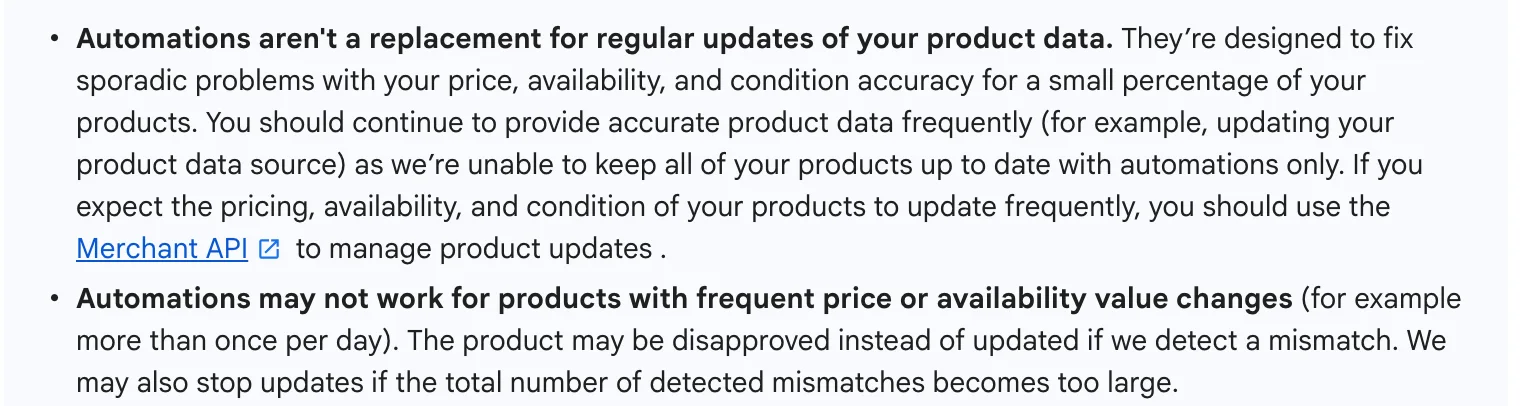
Google is unusually open about the limit. Merchant Center can update price and availability from your landing pages, and it's on by default, but Google's own help page says it isn't a substitute for keeping your feed current12.
What you control
robots.txt and the named AI user agents
robots.txt lets you allow or block each crawler by name15. For product pages, we'd allow the search crawlers and make the training call separately:
User-agent: OAI-SearchBot
Allow: /products/

User-agent: PerplexityBot
Allow: /products/

User-agent: GPTBot
Disallow: /
OpenAI and Meta both say a change can take about 24 hours to apply311, and Perplexity says the same9.
Blocking a search crawler takes you out of that assistant's answers, so check whether your CDN or firewall blocks AI crawlers by default before you assume robots.txt is the whole story. Microsoft is moving the other way: from February 2027, grounding in Bing and Copilot answers is set page by page with a meta tag or header, not in robots.txt7.
Structured data on every product page
Mark up each page with schema.org Product and an Offer carrying price, priceCurrency and availability13.
For a product with variants, ProductGroup with one hasVariant per colour and size lets a bot see the navy L as well as the default14.
Render it in the HTML the server sends, not after the page loads.
This is also what Google's automatic updates read12.
A feed wherever one is accepted
Structured data makes a crawl more accurate. A feed takes the guessing out: you say what's true and when. Google, Microsoft and OpenAI take one today, and Meta has a catalogue, so send those on a schedule, and fill in Perplexity's merchant form so you're ready when it asks8. How each one works is in how products get into AI assistants.
When the assistants keep quoting last week's price
The fix is a feed that changes when your prices do, and pages that say the same thing.
FeedWorks refreshes your catalogue as often as hourly, pushes Google Merchant Center and your Meta catalogue directly by API with only the products that changed, and can lay a fast price and stock source over a slower catalogue, so a sale or a sell-out reaches Google and Meta on the next scheduled run, as often as hourly, not whenever a bot comes back.
The feeds for ChatGPT, Copilot and Perplexity come from the same catalogue, at URLs you hand to each programme.
In early access, FeedWorks also asks shopper questions on ChatGPT, Gemini, Google AI Mode, Perplexity and Bing as a logged-out shopper, and flags where the answer disagrees with your feed: a price mismatch, a stock mismatch, an out-of-stock variant shown. It's the nearest you'll get to seeing what a crawler made of you.