Product feed specs for Google, Meta, Microsoft, TikTok, Pinterest and ChatGPT
Every channel here wants an ID, title, description, link, image and price, and each spells the rest its own way. The required fields get a product accepted; the optional ones, such as material, care, fit and returns, are what the AI assistants match a detailed question against.
Last verified 21 November 2026. A four minute read.
The fields the assistants match on
Ask ChatGPT for a sage green linen duvet cover you can tumble dry, and it says what it's looking for before it recommends anything.
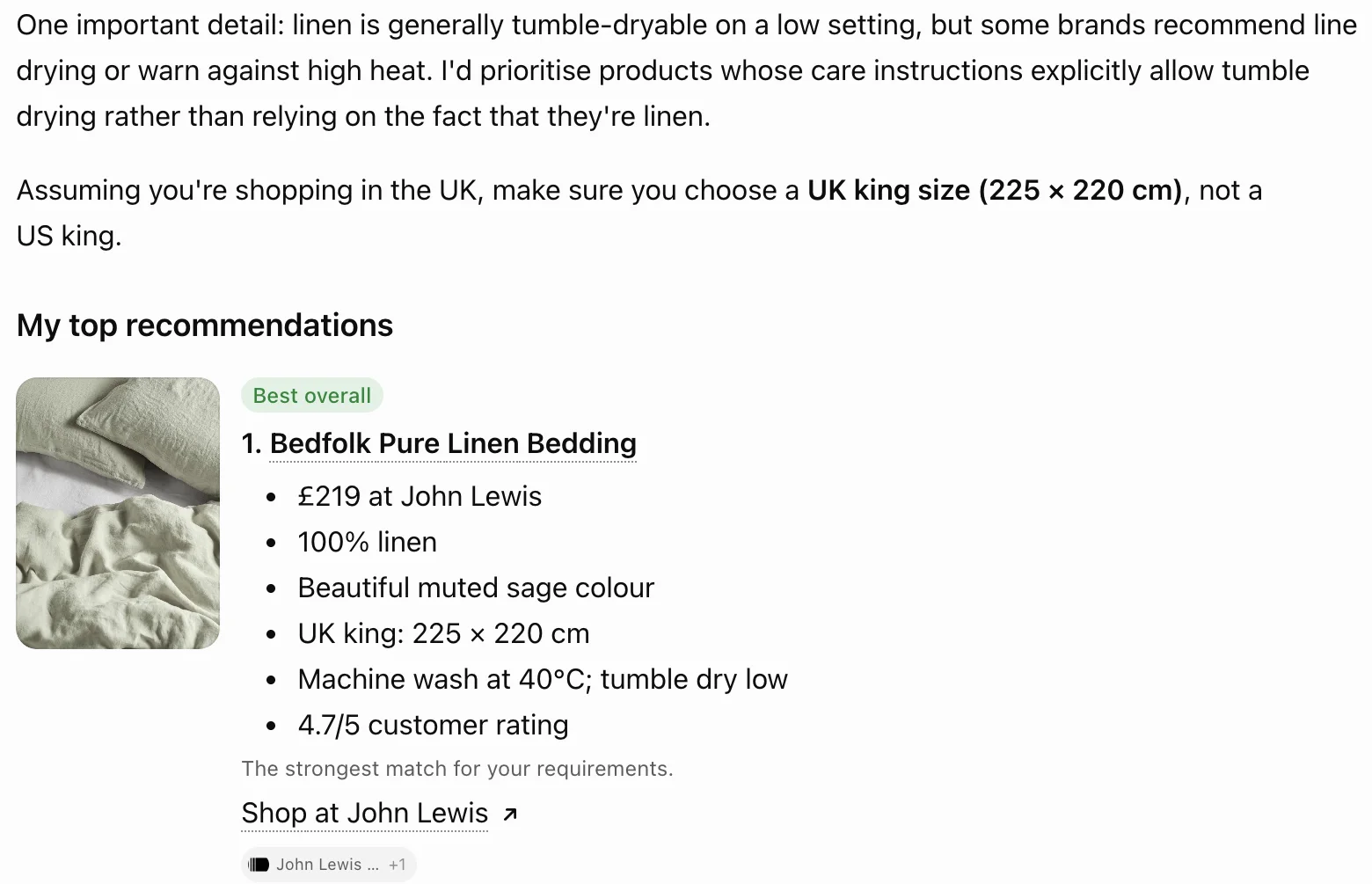
None of those is required for a duvet cover on any channel. Material, colour, size and care sit in the optional half of every spec, and they're the half most feeds leave empty. The ads channels read the same fields to place a product in a filter or a long search; the assistants read them to answer a question.
Six specs side by side
As of 21 November 2026. Each channel name opens our page on that spec, and the official spec is linked beside it.
| Channel and official spec | Required on every product | Format | Refresh |
|---|---|---|---|
| Google: Product data specification1 | id, title, description, link, image, price, availability, brand for new products; GTIN, apparel and shipping where they apply | TSV or XML, Sheets, Merchant API | Scheduled fetch; products expire 30 days after their last update7 |
| Meta: Commerce Manager specifications2 | id, title, description, availability, condition, price, link, image, brand | CSV, TSV, XLSX, XML, Sheets | Scheduled feeds at most hourly8 |
| Microsoft: Product attributes3 | id, title, description, link, image, price; brand, GTIN, MPN where assigned | Tab-separated text, or Google XML | URL download every 24 hours, or a Google import9 |
| TikTok: Catalog product parameters4 | sku_id, title, description, availability, condition, price, link, image, brand | CSV, XML, ZIP, GZ | Data Feed Schedule from a URL10 |
| Pinterest: Get started with retail catalogs5 | id, title, description, link, image, price, availability; item_group_id for variants | TSV, CSV, XML, Sheets | Hosted file read daily5 |
| ChatGPT: Product feed schema6 | item_id, title, description, url, brand, seller_name, image_url, availability, price, target_countries, store_country | JSONL, CSV, TSV | Full snapshots by upload, URL or SFTP11 |
Channel by channel
Google sets the baseline the others copy. Its required list is short, but GTIN, apparel and shipping fields switch on by country, and the optional fields, product highlights and the conversational attributes among them, are what AI Mode and Gemini have to work with. The Google spec has every limit.
Meta reads a Google-style feed with longer limits and its own spellings: in stock with a space, brand and condition on every product, and an ID that must match your pixel.
The Meta spec covers the pixel rule and the fields catalogue ads use.
Microsoft will import your Google feed for you, then fill its gaps with defaults: a blank availability means in stock, a blank condition means new. The Microsoft spec includes the UCP fields Copilot checkout needs.
TikTok publishes no character limits, renames the ID to sku_id, and has 5 availability values.
Its optional video and sale price fields shape the ad more than anything required; the TikTok spec has the detail.
Pinterest is the strictest about images, at 1,000 by 1,500 pixels, and the harshest about mistakes: one bad required field fails the whole catalogue. The Pinterest spec covers both.
ChatGPT adds three fields a Google feed doesn't carry and rejects any row with a missing or unrecognised availability value. The ChatGPT spec is the field reference; setup and access are in the ChatGPT feed guide.
Why the optional fields matter more each year
A shopper types a sentence to an assistant, and the sentence carries detail: wide fit, tumble dry, under 150 pounds, free returns.
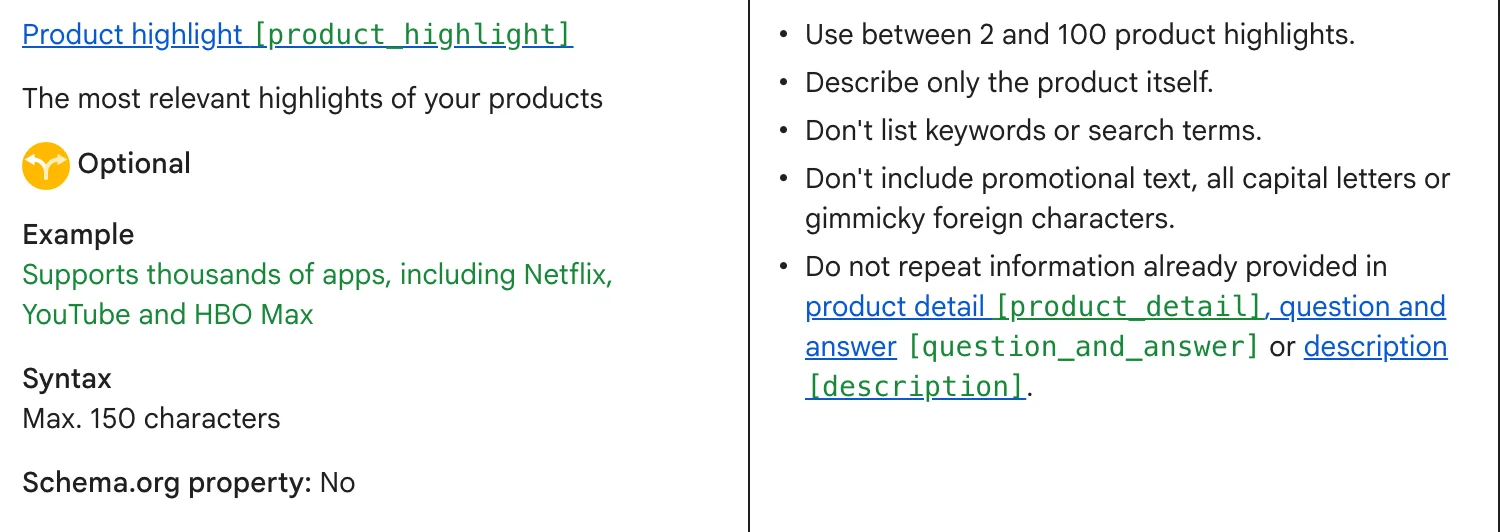
The required fields get a product into the running on every channel above. The optional fields are where a feed can state those details, and they only get filled when someone moves the facts out of the description and into fields.
On Shopify, one-click apps such as Google & YouTube sync the store to a channel12, and they send what the store holds, the same as for every other store on the platform. For most stores that means those facts are still inside descriptions and tags.
When one catalogue has to meet six specs
The same product needs in_stock for Google, in stock for Meta and an explicit value for Microsoft, which otherwise assumes in stock; a 2:3 image for Pinterest and a square one for TikTok; three extra columns for ChatGPT.
Keeping six copies by hand is how they drift apart.
FeedWorks holds one catalogue, merges faster price and stock sources onto it, and builds each channel's feed with that channel's spellings and fields. It pulls attributes out of descriptions, tags and collections into fields, and shows required and recommended fields per channel before anything goes out.